MANUFACTURER VARIES 412010 Street Elbow Schedule 40
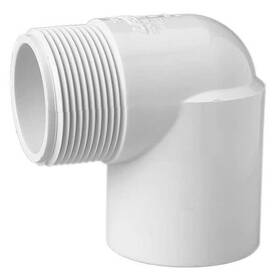
( Brand: Manufacturer Varies ), ( Manufacturer Part Number: 412010 ), ( Type: Pipe Fittings And Couplings ), ( Country/region Of Manufacture: United States ), ( Color: White )
Review MANUFACTURER VARIES Street Elbow In Schedule 40
The 412010 90 Schedule 40 Elbow is a pipe fitting used for making a 90-degree turn in a piping system. This elbow is designed according to the American Standard ASME B16.9 (UNF) threading standard and Schedule 40 specifications, making it suitable for applications in various industries, especially those dealing with high-pressure fluids or gases.
This 90-degree elbow is precision-manufactured using top-grade carbon steel, ensuring durability and strength. The Schedule 40 designation indicates that the wall thickness of the pipe and the fitting is greater than Schedule 30, providing more structural stability to face greater operating pressures.
The exterior has a smooth, uniform finish, while the inside boasts a fine threading pattern that provides a secure connection when paired with a complementary Schedule 40 pipe. This threaded connection ensures a leak-free joint and offers excellent corrosion resistance, contributing to a long service life.
This 90-degree elbow features a generous entry and exit radius, allowing for comfortable maneuverability around tight corners during installation. The design provides minimal resistance to the fluid flow, ensuring efficient operation and reducing energy loss that can result from turbulence.
The 412010 90 Schedule 40 Elbow is an essential component for pipe systems that require a reliable, efficient, and robust solution to negotiate directional changes. Whether you are working on building services, industrial applications, or oil and gas infrastructure, this high-quality pipe fitting can aid in streamlining your piping layout and enhancing overall system performance.
Pros and Cons of Buying a Schedule 40 90 Degree Elbow (412010)
1. Pros:a. Compatibility: These elbows are designed to work with Schedule 40 piping systems, making them a reliable option for those working on such projects.
b. Durability: Schedule 40 elbows are manufactured using a seamless, thick-walled pipe to ensure strength and longevity against corrosion, pressure, and other external factors.
c. Pressure Capacity: These elbows are rated for higher pressure capacities than their Schedule 80 counterparts, making them more suitable for industrial and high-pressure applications.
d. Seamless Design: The lack of a joint at the elbow connection minimizes the risk of leaks, making installation more efficient and the overall system more dependable.
2. Cons:a. Cost: Schedule 40 elbows are generally more expensive than Schedule 80 elbows due to their thicker walls and higher pressure capacity.
b. Limited Flexibility: Schedule 40 elbows are rigid and don't offer as much bending capacity as other pipe fittings. This makes them less ideal for applications that require extreme bends or turns.
c. Size and Weight: The larger diameter and thicker wall of Schedule 40 elbows make them heavier and bulkier than Schedule 80 elbows, which can increase transportation and installation costs.
3. Conclusion:Schedule 40 90-degree elbows (412010) are ideal for projects requiring high-pressure piping systems and substantial durability. Their seamless design ensures a leak-free connection, and their thicker walls make them resilient against external factors. However, they come with a higher price tag and limited bending capacity compared to other schedules. Consider the specific requirements of your project when determining whether Schedule 40 elbows are the best choice.
4. Recommendation:If your project necessitates a high-pressure piping system and the greater durability offered by Schedule 40 elbows, we recommend investing in these fittings. Ensure that you budget appropriately for the additional cost and plan logistics to accommodate their larger size and weight. For smaller scale projects or projects with lower pressure requirements, you may consider opting for less expensive Schedule 80 or other types of elbows. Always consult with a piping professional before making a final decision.
Details:
ColorWhiteMPN412010UPC. If an order has already been shipped, simply refuse the package when it arrives or return to sender if courier delivers. Warranty issues with all power equipment must be addressed through the manufacture. Further warranty may be offered by the product Manufacturer.
part #: 412010 price
- $10.33
specifications poolmaintgo:
- brand: Manufacturer Varies
- mpn: 412010
- type: Pipe Fittings And Couplings
- country/region of manufacture: United States
- color: White
returns poolmaintgo:
- method: Money back
- paid by: Buyer
- policy: Returns Accepted
- time: 30 Days
payments poolmaintgo:
- credit card: Discover
- other
- wallet: Google-pay
offer poolmaintgo:
- options: Ship-to-home
- quantity: 100
- started: February 4, 2025
- availability: In Stock
- sold: 0
general poolmaintgo:
- Pools Spas > Pool Equipment Parts > Other Pool Equipment Parts
- condition: New
shipping poolmaintgo:
- service: UPS Ground
- type: Fixed
- class: Standard
- cost: $0.00
- carrier: UPS
- transit: 2-6 Days
seller poolmaintgo:
- city: Hibbing, Minnesota
- # reviews: 136739
- rating: 98.8%
Manufacturer Varies 412010 Is Similar To:
- Manufacturer Varies 1435-007 Female Adapter 3 4 In Insert X Fnpt (53.7% similar) Manufacturer Varies female adapter, 3/4 in, insert x font 1435-007: PVC, for pipe schedule 40, male, insert, 13/16 in. Warranty issues with all power equipment must be addressed through the manufacture. Further warranty may be offered by the product Manufacturer. If an order has already been shipped...(December 8th, 2024)
- Manufacturer Varies 1436131 Pvc Reducing Male Adapter Mnpt X Insert 1 In 3 4 Pipe (50% similar) If an order has already been shipped, simply refuse the package when it arrives or return to sender if courier delivers.: COLORGRAYMPN1436131UPC. PVC reducing male adapter, Mont x insert, 1 in 3/4 pipe size: Manufacturer Varies size 1436131: PVC, for schedule 40, in, male, not, 13/16 in. Warranty ...(November 13th, 2025)
- Manufacturer Varies 1413-005 Pvc Male Elbow 90 Degrees Insert X Mnpt 1 2 In Pipe Size (56.9% similar) COLORGRAYMPN1413-005UPC. PVC male elbow, 90 degrees, insert x Mont, 1/2 in pipe size: Manufacturer Varies size 1413-005: degrees PVC, for schedule 40, in, male, insert, 5/8 in. Further warranty may be offered by the product Manufacturer. If an order has already been shipped, simply refuse the ...(February 2nd, 2026)
